
Afghanistan at Crossroads of Climate Change and Human Rights
- World Anti Extremism Network
- Afghanistan at Crossroads of Climate Change and Human Rights
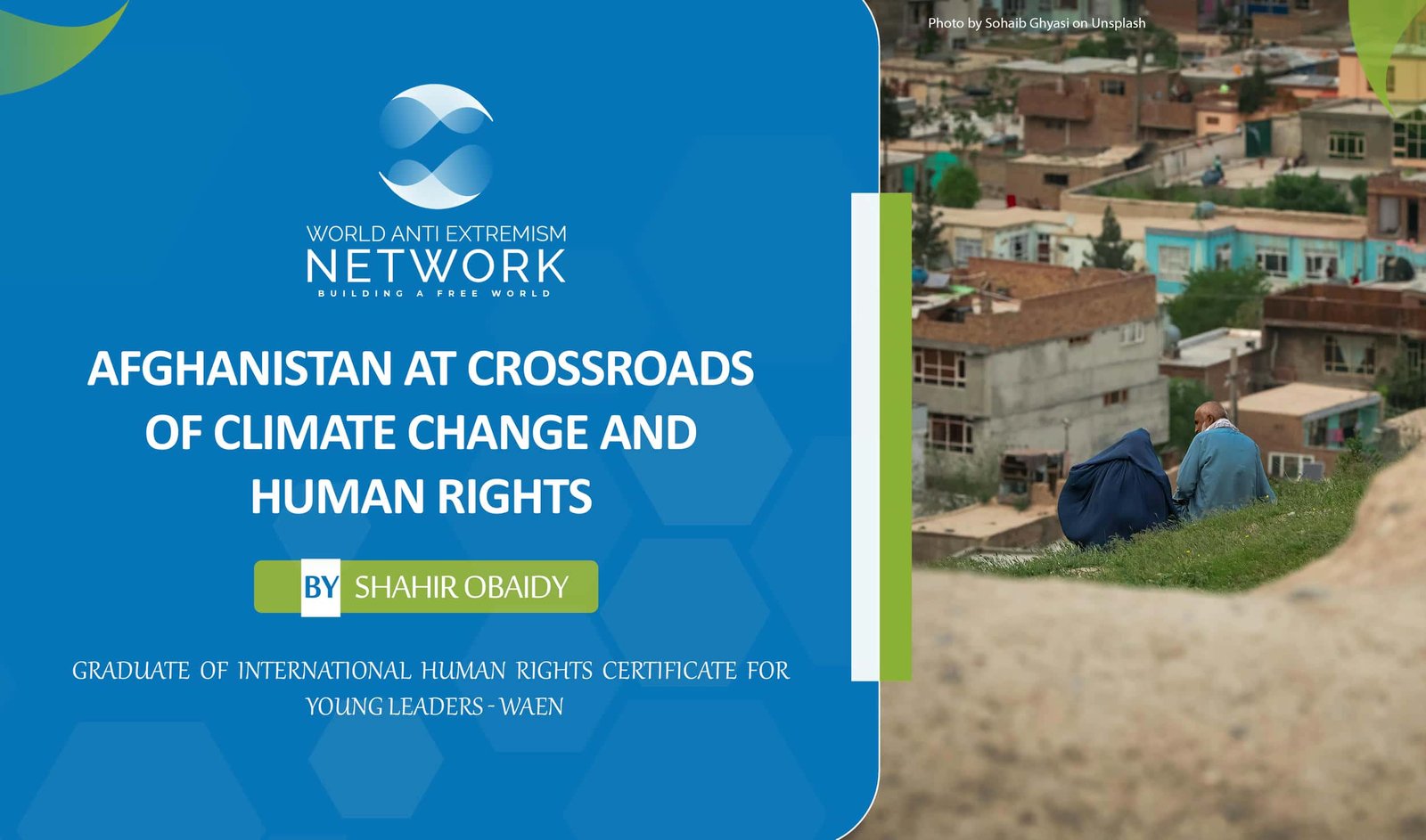
Afghanistan’s human rights landscape has undergone a profound transformation since the Taliban’s return to power in August 2021; a shift that coincides with worsening climate-induced challenges. Climate change intensifies pre-existing vulnerabilities and undermines the protection of human rights in areas such as health, food security, access to water, and education. These effects are deeply intertwined with the systemic oppression and instability under Taliban rule, which further amplifies the plight of the country’s most at-risk populations.
Human Rights and Environmental Degradation
Climate change impacts are highly pronounced in Afghanistan, one of the most vulnerable countries to climate-induced disasters. According to the Global Climate Risk Index, Afghanistan ranks among the top countries suffering from climate-related extreme weather events, including prolonged droughts, flash floods, and erratic seasonal changes. These disasters disproportionately affect rural areas, where subsistence agriculture is the primary livelihood. About 80% of the Afghan population depends on agriculture, which is increasingly untenable due to water shortages, land degradation, and fluctuating temperatures.
The 2011 Afghanistan Human Development Report warns that by 2025 the country’s water availability per capita per year will decline by approximately 36% relative to 2004. By 2040, it will fall by almost 50%, compounded by severe deforestation and overgrazing. Such environmental stress has triggered food insecurity. According to a WFP report , 1 in 3 Afghans out of a total population of 43.4 million—face acute food insecurity and do not know where their next meal will come from. For Afghan women and children, who are already marginalized under the Taliban regime, these cascading effects of climate change intensify their vulnerability. Restricted mobility and access to resources hinder their ability to adapt and recover from environmental disasters.
Women and Girls at the Intersection of Climate and Rights
Under Taliban rule, the systemic exclusion of women from educational and economic opportunities heightens their exposure to climate-related risks. As reported by UNESCO, 1.4 million girls remain banned from school by the de facto authorities. Severely limits their ability to contribute to or benefit from climate resilience efforts. Moreover, the International Labor Organization (ILO) highlights a 25% drop in women’s employment since 2021, which undermines their financial independence and adaptive capacity. This burden is intensified by cultural norms that confine many Afghan women to agriculture-based roles — sectors most severely impacted by environmental degradation and climate shocks.
Ethnic and Religious Minorities: Double Vulnerabilities
Minority communities such as Hazaras and Shias, face dual crises of persecution and environmental stress. Human rights organizations have documented increased violence and systematic displacement of minority groups under Taliban rule, coinciding with the destruction of fertile lands and water infrastructure in their regions. For instance, recurrent droughts in Daikundi; a Hazara-majority province, have forced over 30 percent of the population into displacement, where they face continued threats from both the regime and environmental calamities.
Humanitarian Crisis in the Face of Climate Injustice
The Taliban’s inadequate governance exacerbates the humanitarian fallout of climate change. Approximately 28.8 million Afghans, including 15.2 million children, currently require humanitarian assistance, as reported by UNICEF. Climate-induced migration from rural areas to urban centers strains already overwhelmed resources and infrastructure. Simultaneously, the regime’s ban on women working for NGOs hinders the equitable distribution of aid.
The international freezing of $9.5 billion in Afghan central bank reserves further cripples the country’s ability to invest in climate adaptation strategies. The collapse of banking systems and economic sanctions following the Taliban takeover have led to over one million job losses. This economic stagnation disproportionately impacts the rural poor, who face higher exposure to climate risks without sufficient governmental or international support.
Environmental Mismanagement
The Taliban regime’s disregard of environmental priorities worsens Afghanistan’s climate vulnerability. The weakening of civil society organizations has silenced voices advocating for sustainable practices, while many NGOs have struggled to transfer funds into Afghanistan due to banking restrictions and liquidity issues. As a result, they increasingly rely on informal systems like Hawala, which limit transparency and reduce their capacity to implement climate resilience programs effectively. At the same time, the absence of a coherent national framework for water management and renewable energy projects continues to stifle long-term solutions. Compounding these challenges, Taliban-controlled institutions; such as the Ministry for the Promotion of Virtue and Prevention of Vice have imposed restrictions on mobility, NGO operations, and access to services, particularly for women. These policies directly obstruct community-level climate adaptation and disaster response.
The Broader Implications
Climate change’s impact in Afghanistan extends beyond its borders, creating regional and global consequences. Drought-induced migration and deepening poverty fuel social instability, increasing the risk of recruitment into extremist groups. Meanwhile, declining agricultural output raises dependency on international food imports, threatening broader food security. These internal disruptions spill over into neighboring countries, amplifying geopolitical tensions.
These internal disruptions have prompted concern from international organizations. Bodies such as UNHCR, WFP, and IOM have repeatedly highlighted climate-induced displacement in Afghanistan. However, aid delivery has been severely disrupted due to Taliban-imposed bans on female aid workers, limiting access to vulnerable populations. In response to governance concerns, key donors including the EU and World Bank have suspended major environmental funding, further weakening Afghanistan’s capacity to respond to climate-related crises.
Opportunities Amid Challenges
Despite these challenges, opportunities exist to address the dual crises of climate change and human rights violations. Community-based resilience initiatives, led by Afghan youth and civil society members operating in exile, highlight the enduring determination to rebuild. For example, community-led renewable energy projects offer dual benefits by providing sustainable power solutions and reducing environmental degradation.
The international community has a pivotal role in ensuring that climate aid is contingent on inclusive governance and adherence to human rights principles. Prioritizing education, particularly for women and girls, and investing in decentralized renewable energy solutions can serve as transformative measures.
Conclusion
In a land already fractured by war and displacement, climate change deepens every scar. Addressing Afghanistan’s environmental vulnerabilities requires protecting human rights, empowering local communities, and ensuring fair access to resources. Continued silence or inaction of the international community risks not only the decline of a fragile nation but also the destabilization of regional security and environmental sustainability. The Afghan people deserve more than survival; they deserve dignity, climate justice, and full recognition of their rights. To ignore these intertwined crises is to abandon a nation at its most vulnerable moment.
The opinions expressed in these articles are solely those of the authors and do not reflect the views or positions of the organization. If you find any information incorrect, please contact (research@worldantiextremism.org), and we would be happy to assist you. You can download, distribute, and reuse this work, provided you credit the author and cite the original source.
Related Articles
Subscribe to our newsletter and stay updated.
Contact
Toronto, Ontario, M1L 0E5 Canada
Subscribe to our newsletter and stay updated.
Contact
Toronto, Ontario, M1L 0E5 Canada
Subscribe to our newsletter and stay updated.
Contact
Toronto, Ontario, M1L 0E5 Canada