

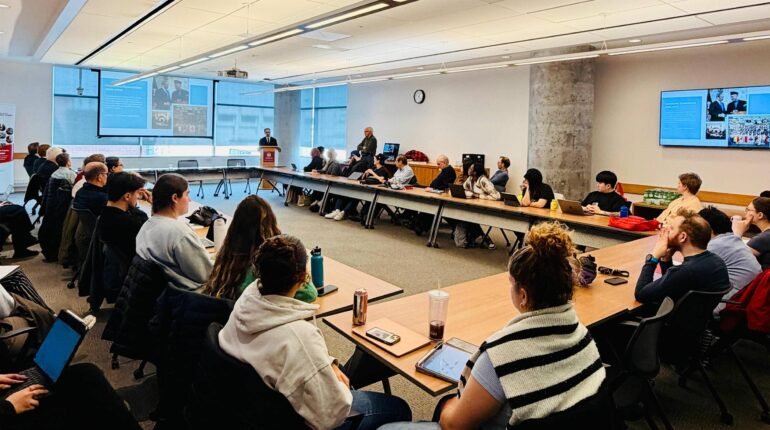
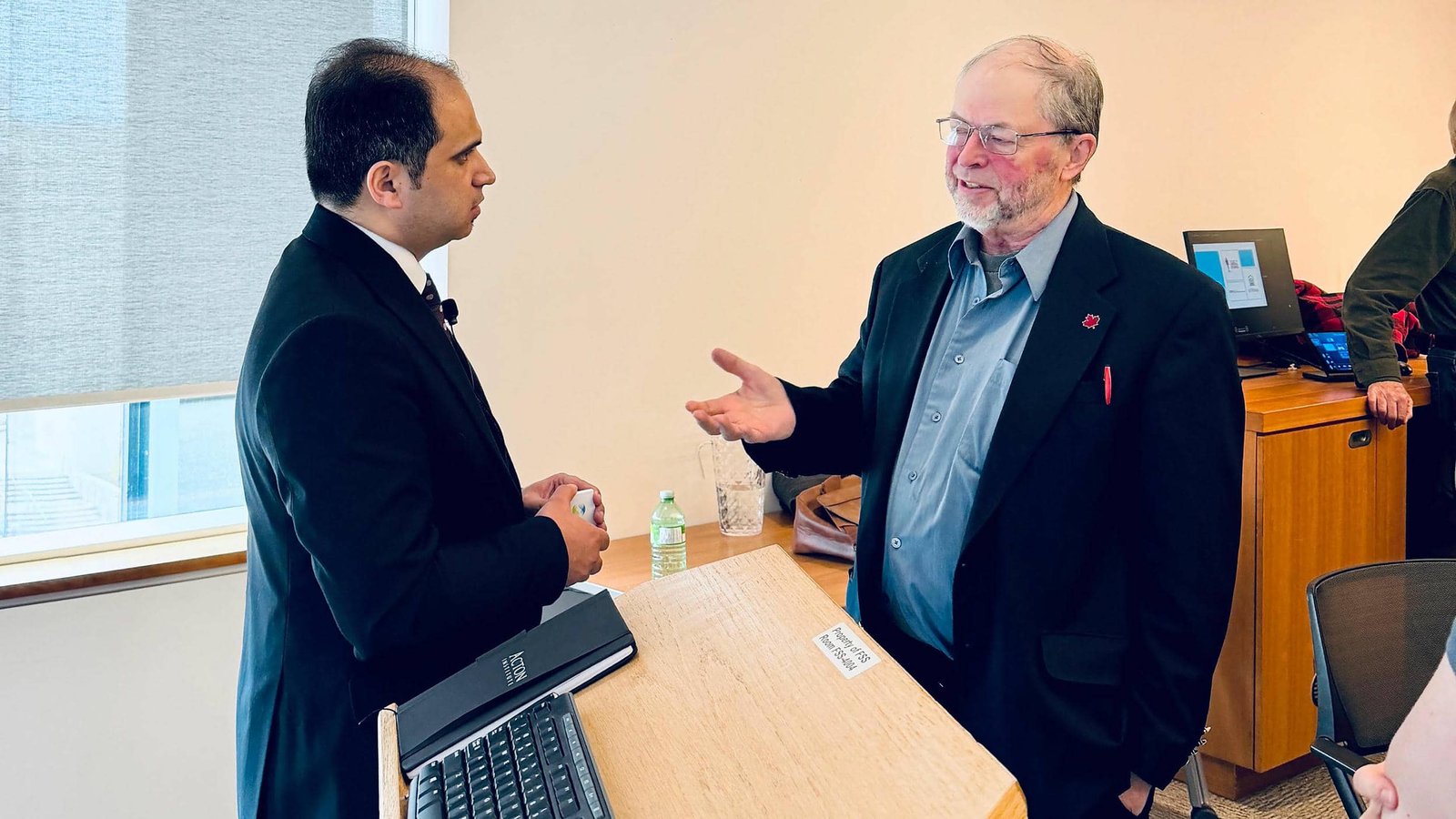
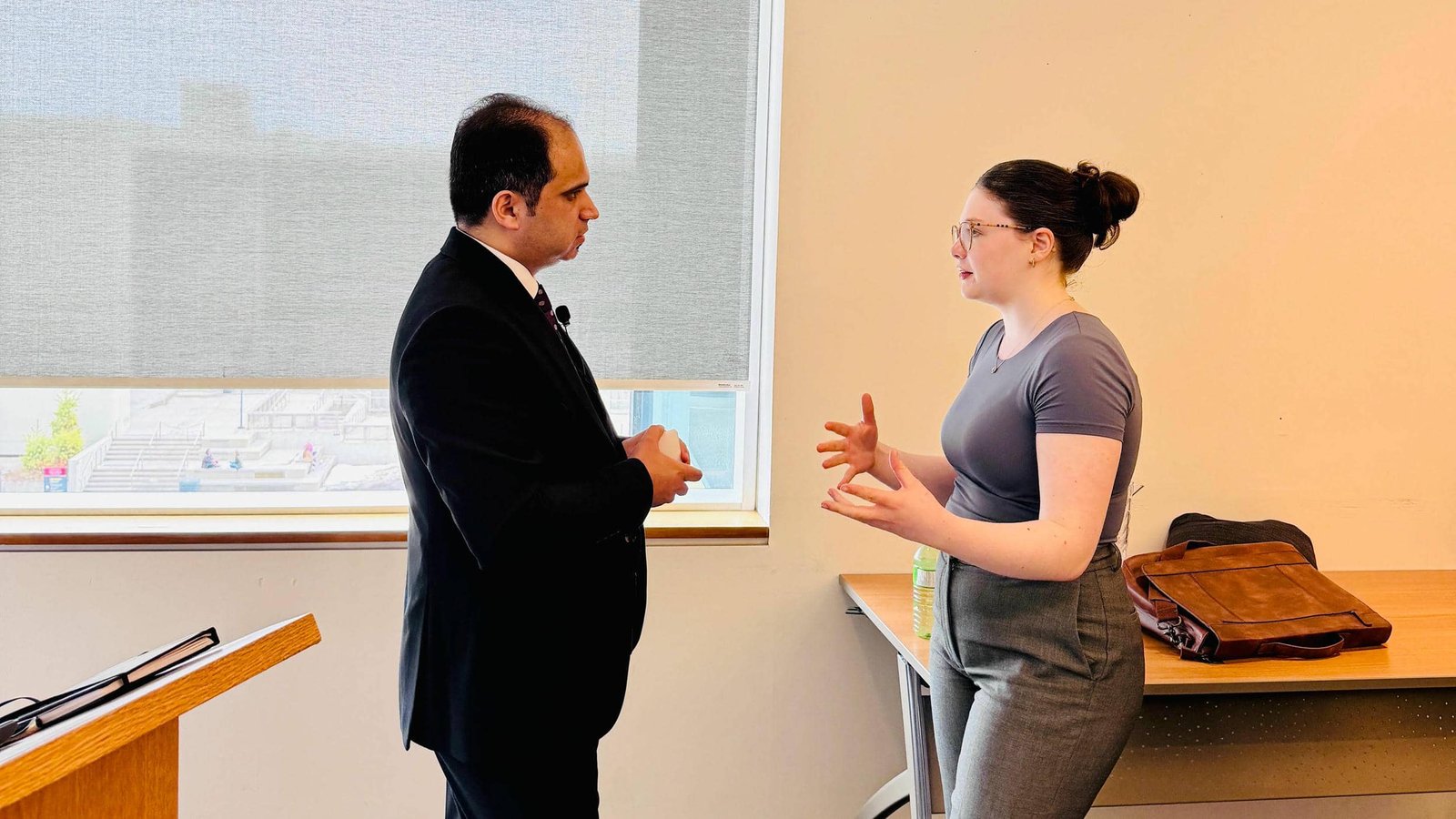
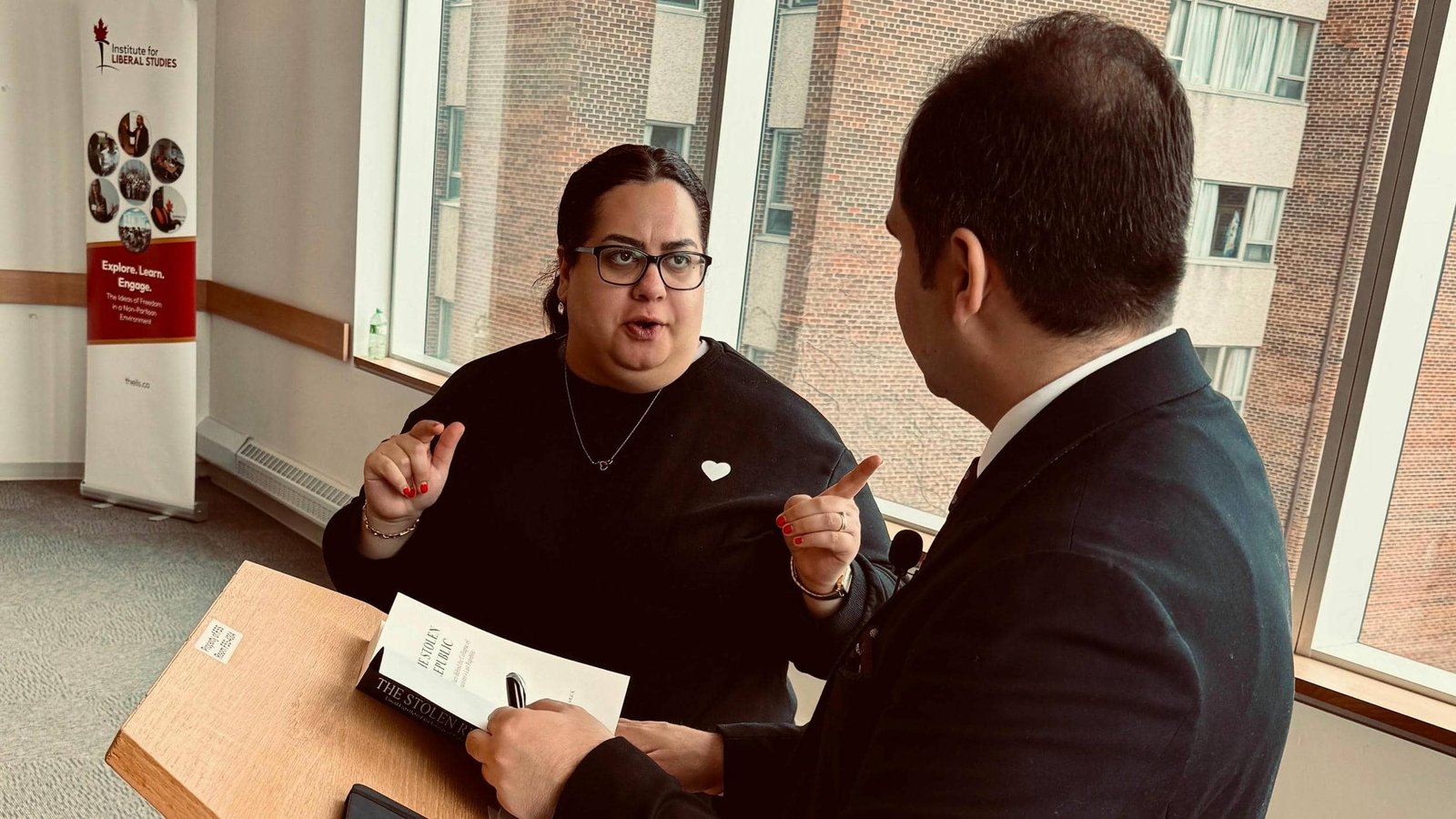
On March 10, 2026, Khalid Ramizy, CEO of the World Anti Extremism Network (WAEN), delivered a presentation at the University of Ottawa on his book, The Stolen Republic: Untold Facts Behind the Collapse of Afghanistan’s Last Republic. Chaired by Prof. Paul Robinson, the session explored the fall of Afghanistan’s last republican government in August 2021, the Taliban’s return, and the country’s ongoing challenges.
Mr. Ramizy opened by portraying Afghanistan as a nation rich in culture, history, and talent, often overshadowed by conflict and poverty. He reflected on the democratic gains between 2001 and 2021, describing the period as a “golden era” marked by a new constitution, elections, expanded freedoms, women’s participation, private-sector and infrastructure development, education for millions of girls, media growth, and stronger international relations.
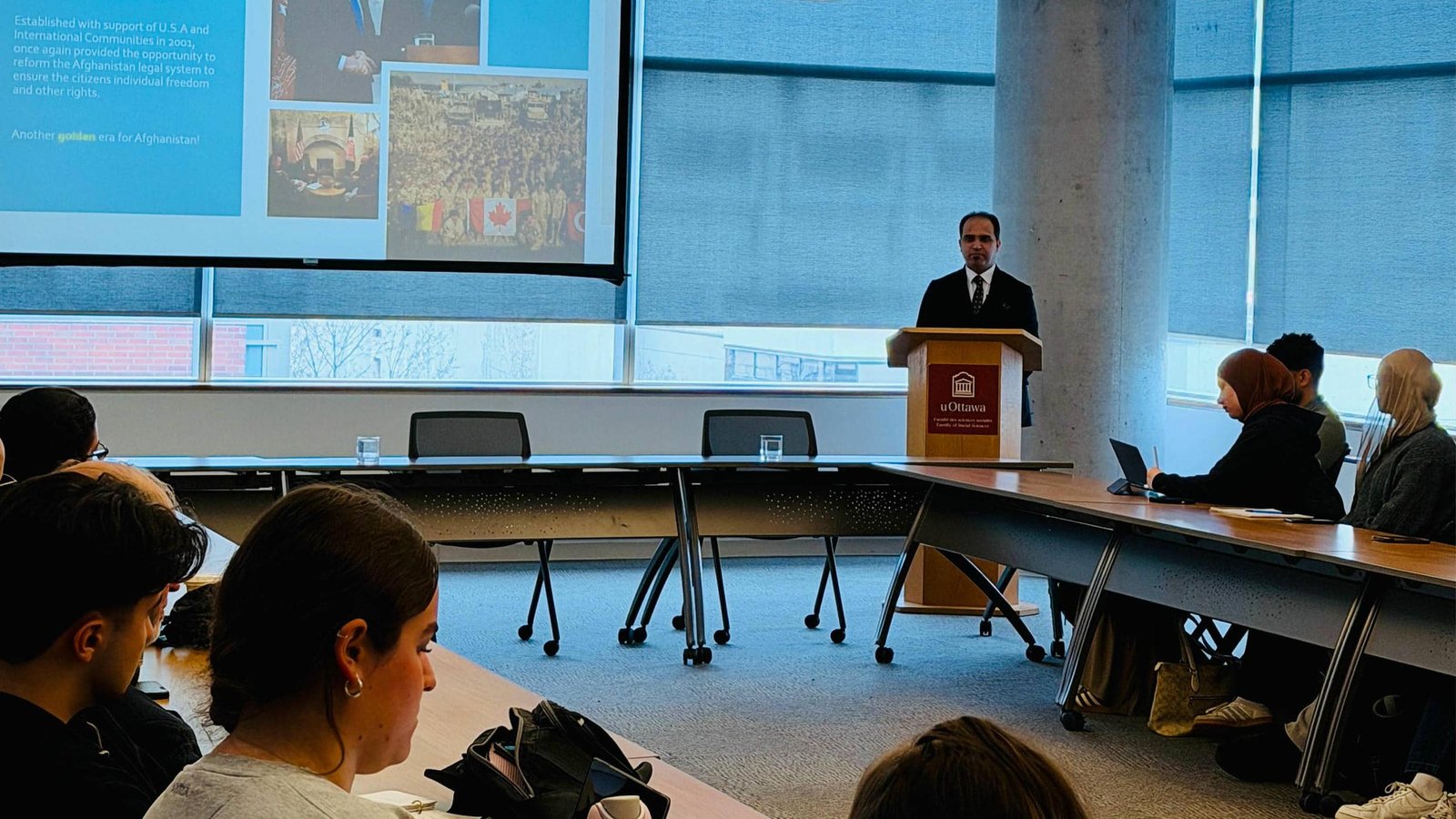
Recalling August 15, 2021, which he called a “Black Day for every Afghan”, Mr. Ramizy described his personal escape amid the Taliban takeover. Present at the National Youth Conference the day before the collapse, he recounted destroying sensitive documents, navigating chaos in Kabul, and fleeing through the airport in disguise. He analyzed the collapse, identifying ethnic tensions, weak governance, corruption, declining morale within the Afghan National Defense and Security Forces, and flawed U.S. policies as contributing factors. He emphasized that there is no meaningful distinction between the “new” and “old” Taliban, underscoring the continued threat to Afghan freedoms.
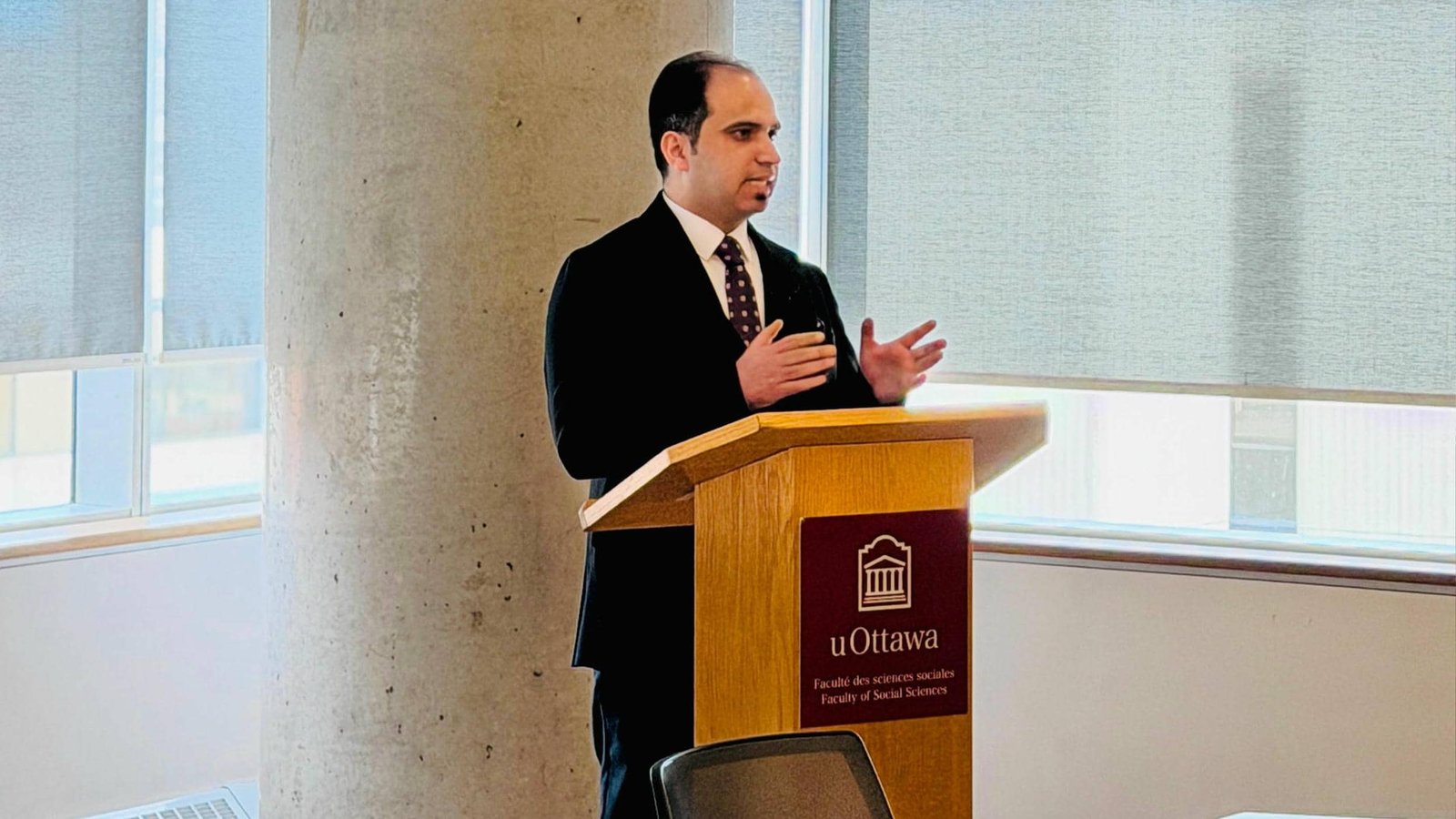
Mr. Ramizy further highlighted ongoing crises in Afghanistan, where girls have been banned from school for over 1,600 days, the country serves as a haven for ISIS-K and Al-Qaeda, 20,000 Taliban-run madrassas fuel radicalization, and the regime maintains suicide-bomber units. Regional rivalries involving India, Pakistan, Iran, Saudi Arabia, and China further exacerbate instability.
The lecture provided an in-depth discussion of The Stolen Republic, which combines personal narratives, media analysis, perspectives from national and international figures, and reflections of Afghan citizens to explore the republic’s collapse. Mr. Ramizy detailed how each of the book’s six chapters contributes to understanding both the human and structural dimensions of the crisis and offers concrete recommendations. These include fostering resistance to authoritarianism, documenting human rights violations, supporting Afghan women, and strengthening civil society and independent media. They also promote inclusive governance, economic opportunity, and ensuring that Afghanistan’s future is determined internally rather than by external actors.
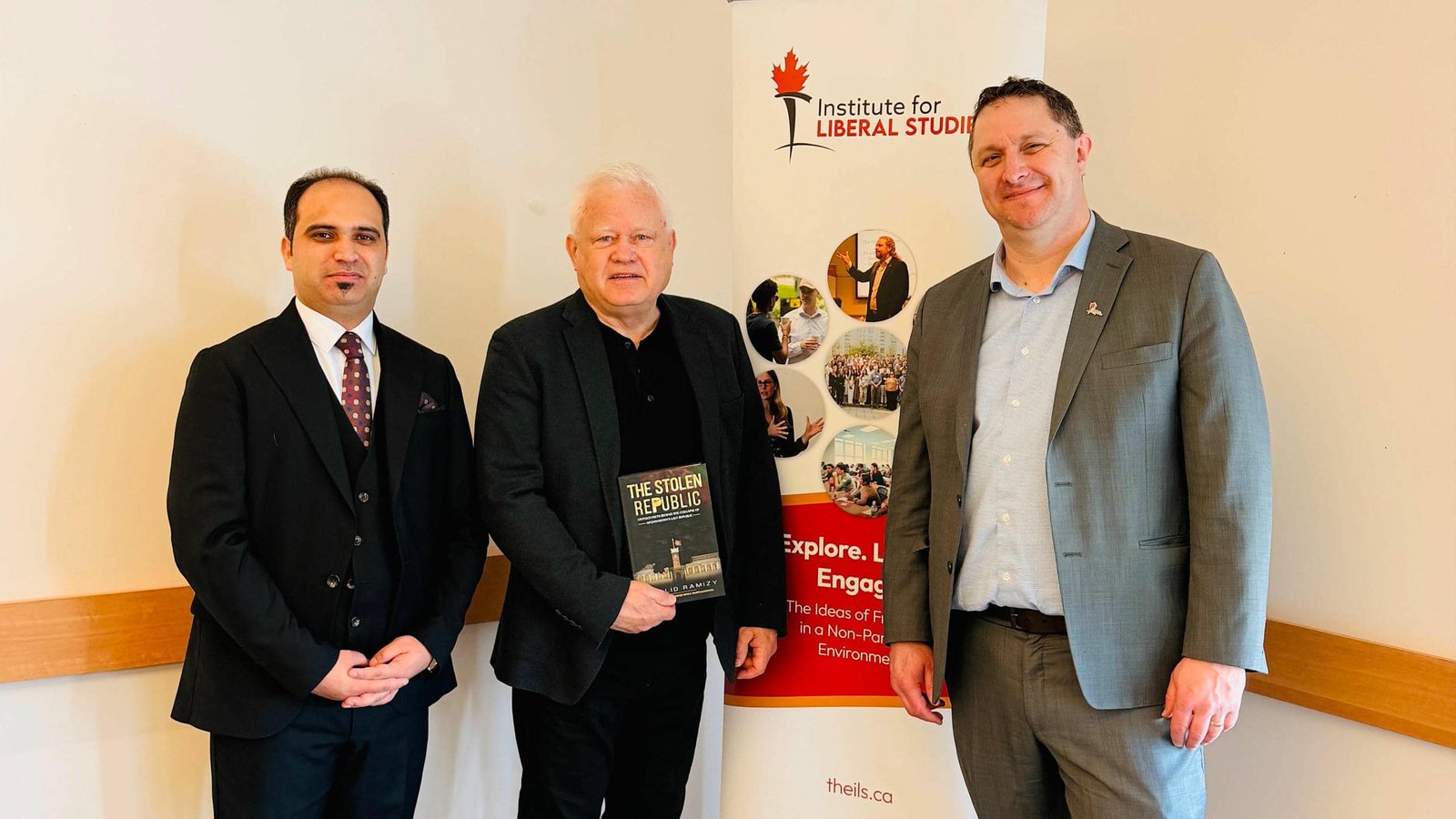
Concluding his presentation, Mr. Ramizy emphasized that Afghanistan’s future must be shaped by its people, with strength rooted in unity, tolerance, and the defense of human rights.